
Join in respectfully
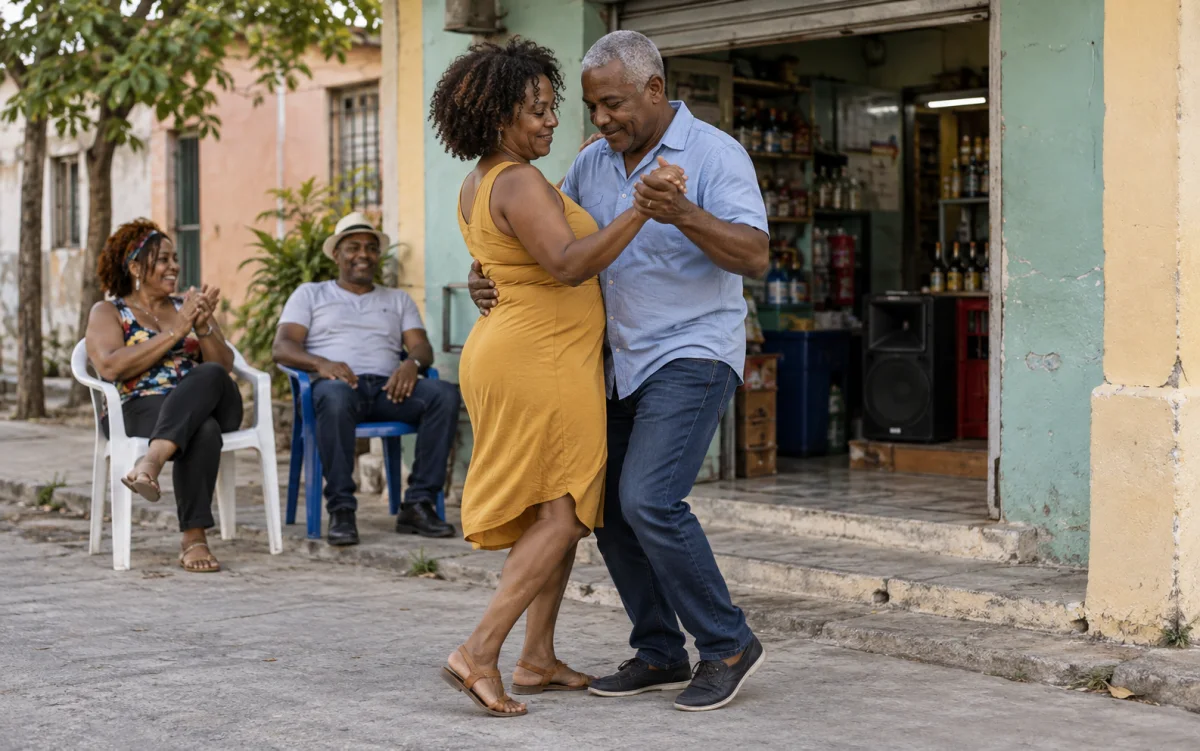
Invite someone to dance and accept their answer without pressure. Agree on a comfortable connection, avoid unfamiliar dips and ask permission before filming. At a colmado, buy from the business and let the people already playing dominoes invite you into the game.
Spend a week at an all-inclusive resort in the Dominican Republic and you will almost certainly see bachata. There will be a show: performers in coordinated outfits doing impressive dips and spins, probably followed by a group lesson where a cheerful animation team teaches fifty sun-burned tourists to count "one, two, three, hip" in a circle. It will be entertaining. It will be competently done. And it will tell you almost nothing about what bachata actually is.
This is not a criticism of the resorts. Their version of bachata is designed for a specific purpose — entertainment for guests who have forty-five minutes between dinner and the evening show. But if you travel to the Dominican Republic specifically to experience bachata, understanding the difference between that version and the real thing is the most important thing you can do before you arrive.
What 'Authentic Bachata Experience' Actually Means
An authentic bachata experience in the Dominican Republic means encountering the dance in the context that produced it: as social music, as community expression, as the soundtrack of ordinary Dominican life. It means dancing not on a hotel ballroom floor but in a colmado parking lot, or on the open-air terrace of a beach bar, or in a club where nobody is watching you because everyone is dancing themselves.
A useful cultural lesson combines musical context with clear technique and feedback. Ask the instructor to explain both what to do and how it relates to the music, at a pace you can follow.
An authentic bachata experience also means understanding that bachata is not performance. It's communication. Two people moving together in response to the same piece of music. That quality — the conversation between partners and the rhythm — is what gets lost in theatrical versions and what makes the original so compelling once you feel it.
The Difference Between Resort Bachata and Real Dominican Bachata
The resort version of bachata is often a simplified, choreography-based teaching model: here's position A, here's position B, do them in this sequence. The choreography exists because it works for groups of beginners who will practice it once and never again. It's a functional approximation of the dance, designed for maximum accessibility in minimum time.
Real Dominican bachata is improvised. The lead doesn't know exactly what combination is coming next — they feel the music and choose. The follow responds to what the lead signals through body connection, not through memorized sequences. This improvisational quality is the soul of the dance, and it's almost impossible to convey in a group lesson setting.
The music is different too. Resort shows tend to use modern bachata — the Romeo Santos-era music with electronic production and hip-hop influences. That music is excellent, but it's three generations removed from the original. Authentic Dominican bachata — the kind you hear at a colmado or from a neighbor's window on a Sunday afternoon — is built around acoustic guitar, bongo, and güira. It has a rawness and warmth that the polished modern productions, for all their quality, can't quite replicate.
How Bachata Lives in Dominican Daily Life
To understand why the authentic experience is different, you have to understand how present bachata is in Dominican daily life. It's not music you go out to hear. It's music that's already everywhere when you arrive.
Walk past a colmado at any time of day and you'll hear it. Stop at a traffic light in a Dominican town and the car next to you has it playing. A family has a gathering and there's bachata. A birthday party in a neighborhood — bachata. Sunday afternoon on a neighbor's porch — bachata. It's atmospheric. It's the sound of the place, woven into moments that have nothing to do with dance.
That ubiquity is why learning bachata in the Dominican Republic produces something different from learning it anywhere else. The music finds you between lessons. You hear a song at breakfast and recognize the rhythm you practiced yesterday. You walk past a colmado in the evening and your feet feel the pattern without being asked. The environment reinforces the learning in a way that no dance studio in another country can replicate.
The Role of the Native Instructor in an Authentic Bachata Experience
The instructor is the most important variable in whether your bachata experience in the Dominican Republic is authentic or not. A certified dance teacher who learned bachata through a training program will teach differently from someone who grew up inside the music — and the difference shows.
An instructor can use demonstrations, counting and musical examples to explain a movement. Ask for the type of feedback that helps you learn; birthplace alone does not determine teaching quality.
Fraimy Pérez grew up in Cabarete. He danced before he taught, and he taught because visitors kept asking him to. That order matters. The dance comes first. The instruction is a way of sharing something he already has, not a skill he acquired in order to teach it.
Cabarete: Where Authentic Bachata Meets International Travelers
Most authentically Dominican bachata happens in places that international travelers find difficult to access — working-class neighborhoods in Santiago or Santo Domingo, small towns in the interior, family gatherings on private property. Cabarete is unusual in that it offers genuine Dominican bachata culture in a setting that travelers from any country can navigate comfortably.
The town is small, English-speaking guides and instructors are available, the venues are accessible on foot, and the local community is genuinely accustomed to (and welcoming of) international visitors. You can have an experience that's authentically Dominican without requiring the kind of local network and language skills that would be necessary in a city like Santiago.
That's what makes Cabarete the best place for a bachata experience in the Dominican Republic. Not because it's the most Dominican place — it's not. But because it's the place where Dominican culture is most accessible to the world, without being distorted for that accessibility.
What an Authentic Bachata Cultural Immersion Looks Like
A fully authentic bachata experience in Cabarete might look like this: morning at the beach, afternoon bachata lesson at a local studio space with Fraimy (one hour, total private attention, zero group lesson energy), followed by a walk through the colmado neighborhood where the music is already playing. Evening: sancocho with a local family or a neighborhood restaurant, then dominos and cold Presidente at the corner colmado until the music at Ojos Locos starts drawing you toward the beach. Midnight: dancing with Dominicans who are genuinely happy to show you how it's done.
Nothing about that day requires a resort. Nothing requires a formal tour operator. It requires a good instructor, a willingness to go where the locals go, and enough bachata in your feet to participate rather than just observe.
How to Find Authentic Bachata Experiences in the DR (Avoid Tourist Traps)
The clearest sign that a bachata experience is designed for tourists rather than for dancing: it happens at a set time, in a set location, for a set duration, with choreography that everyone in the group does simultaneously. That's an activity, not a dance experience.
Look instead for: private lessons with native instructors (not animation teams), social dancing venues where Dominicans actually go (not venues where tourists are pointed by hotel concierges), and cultural activities that connect you with real local life rather than staged versions of it.
Ask your instructor where they go to dance socially. Ask them where they eat. Ask them about the music they grew up with. Those questions will take you to the real Dominican Republic faster than any tour package.
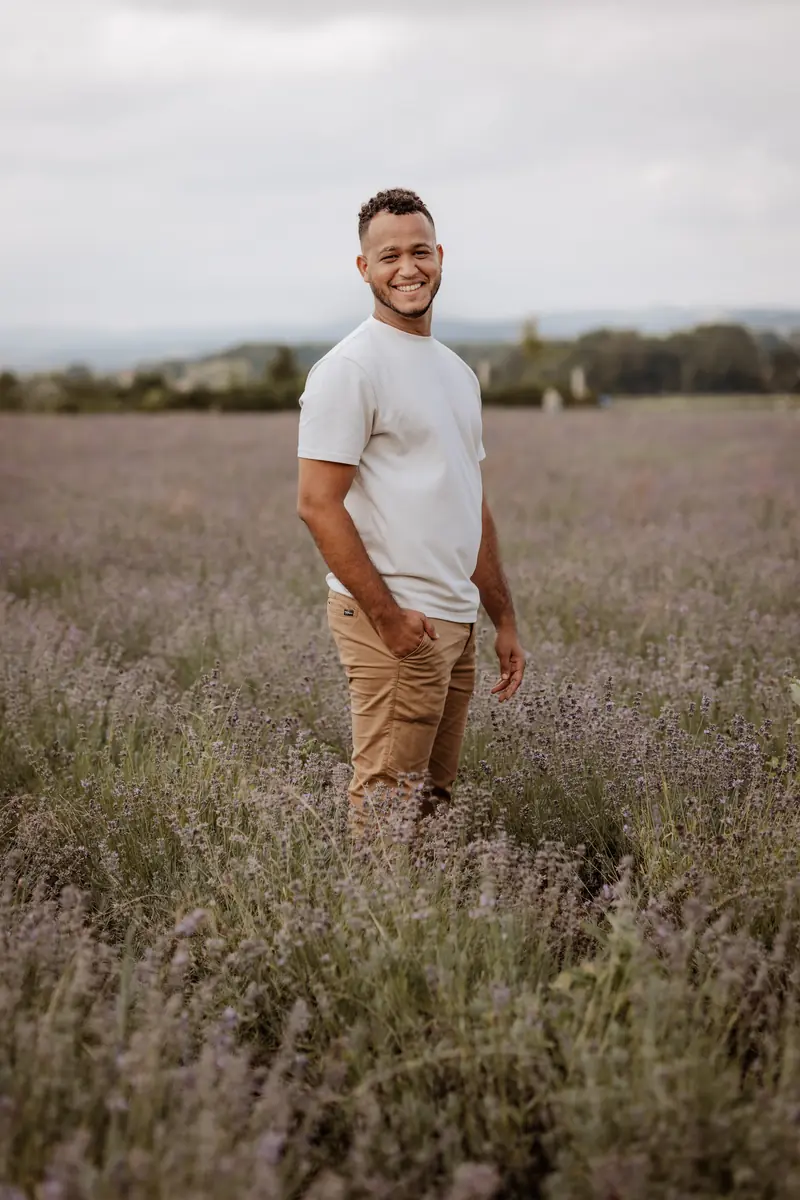
Fraimy PérezDominican instructor from Cabarete. Since 2019 he has taught traditional Dominican bachata, salsa and merengue in private lessons. Meet the instructor →
Ready to dance?
Book your bachata lesson in Cabarete.
Message me on WhatsApp with your dates, level and area. We agree on time and place in Cabarete.