
Listen before you add more steps
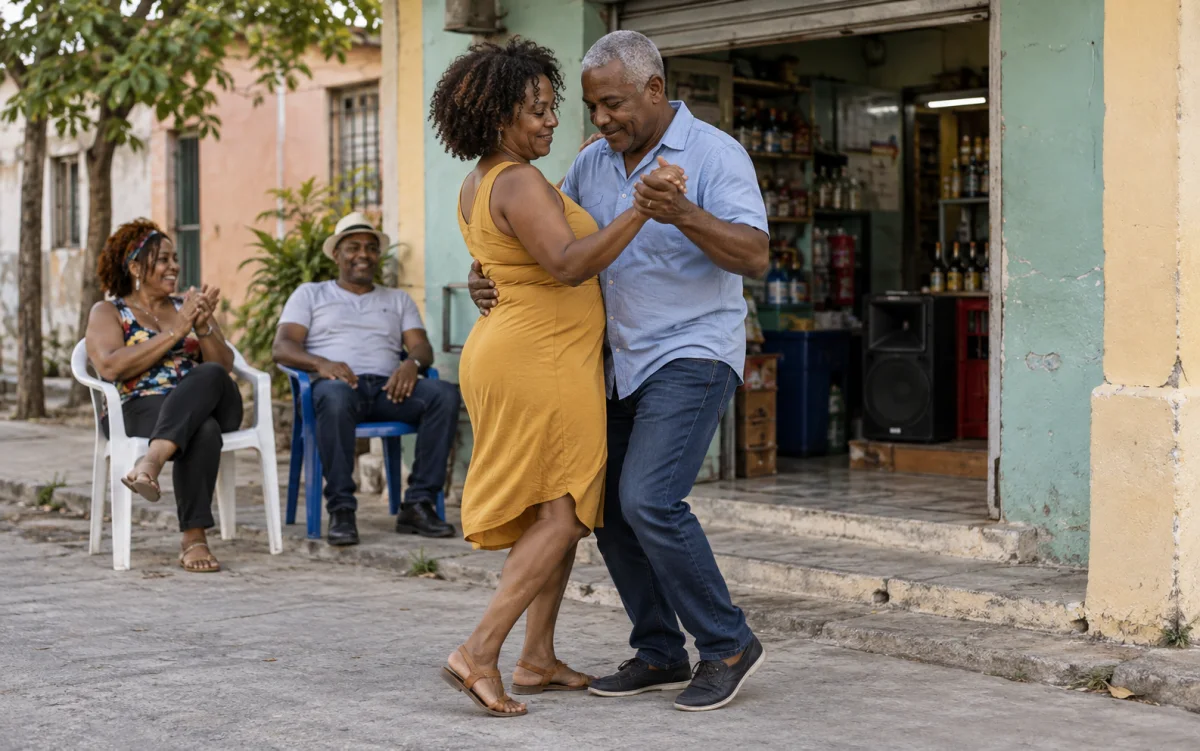
Listen for the repeating pulse, guitar phrases and percussion in a bachata song. Practice a small basic step without turns before adding partner work. You can then ask your teacher how a change in the music affects footwork or the timing of a pause.
If you've ever watched a bachata video and felt something pull at you — something warm, rhythmic, and undeniably human — you were feeling the echo of a place. That place is the Dominican Republic. Bachata wasn't invented in a dance studio. It didn't come from a certification course or a YouTube tutorial. It was born in the barrios, played at colmados, at family parties, at Sunday gatherings where someone always had a guitar. And in the Dominican Republic, it still sounds exactly like that.
This guide covers everything you need to know about learning bachata in the DR: the history, the styles, the best place to take lessons, and what to expect from your first class in Cabarete.
The History of Bachata in the Dominican Republic
Bachata emerged in the Dominican Republic in the early 1960s, rooted in the bolero guitar tradition brought from Cuba. Early artists like José Manuel Calderón recorded what are now considered the first bachata songs — raw, emotional, acoustic. At the time, the genre was dismissed by Dominican elite as low-class music, associated with poverty and rural life. The name "bachata" itself meant something like a raucous outdoor party.
For decades, bachata was banned from mainstream Dominican radio. It was the music of the margins: colmados in working-class neighborhoods, small bars, the countryside. But the people never stopped dancing to it. Artists like Blas Durán, Luis Segura, and Antony Santos kept the genre alive through the 1970s and 80s, slowly building a massive underground following.
Everything changed in the 1990s. Juan Luis Guerra brought bachata to the mainstream with his album "Bachata Rosa," winning a Grammy and introducing the genre to a global audience. Then came Romeo Santos, Aventura, and a new generation of artists who fused bachata with R&B, hip-hop, and pop — creating the smooth, electric sound that now dominates international charts. But underneath all of that evolution, the original Dominican bachata remained: community music, social music, the kind that makes a colmado dance floor erupt on a Tuesday night.
Today, bachata is one of the most popular partner dances in the world. But traveling to the Dominican Republic to learn it is still a fundamentally different experience from taking a class anywhere else on earth.
Dominican Bachata vs Sensual Bachata: Know the Difference
If you've searched for bachata lessons before, you've probably encountered the term "sensual bachata" or "bachata moderna." These are real styles — but they are not what you'll find playing at a colmado in Cabarete on a Saturday night.
Dominican bachata (also called traditional or social bachata) is characterized by lateral footwork — a side-to-side pattern of three steps and a tap or syncopated step. The hips move naturally as a result of the footwork, not because they're being exaggerated for effect. The connection between partners is close but relaxed, and the dancing is social: you're responding to a partner and to the music, not performing a choreography. Turns are simple and functional. The whole thing has a groundedness to it — you feel the rhythm in your feet and your body follows.
Sensual bachata, by contrast, was developed in Spain in the early 2000s. It incorporates body waves, dips, dramatic partner movements, and techniques borrowed from kizomba and contemporary dance. It looks spectacular in videos. It's also a completely different skill set. Many sensual bachata dancers have never learned the original Dominican style at all.
Neither style is better. But if you're traveling to the Dominican Republic, learning the original makes obvious sense. It's what the music was made for. It's what people actually dance at social events. And it's the foundation that makes every other style of bachata more meaningful to learn later.
Why Cabarete Is the Best Place to Learn Bachata in the DR
The Dominican Republic has dozens of cities and towns where you could theoretically learn bachata. Santo Domingo, Santiago, Puerto Plata — all have dance schools and instructors. But Cabarete, on the north coast, offers something none of the others can match: a combination of authentic Dominican culture and genuine international accessibility.
Cabarete combines a beach setting with a year-round local community and international visitors. Ask your instructor about current social dance events and use the nightlife guide to check what to confirm before going out.
More importantly, Cabarete has native instructors who have spent years teaching tourists. They understand how a person who has never danced before needs to be guided. They speak English. They know how to make the experience comfortable and fun from the very first minute. That combination — authentic culture plus actual teaching ability — is rarer than you'd think.
Fraimy Pérez teaches bachata and salsa in Cabarete. Read his instructor profile and ask about his approach, lesson language and availability before booking.
What to Expect From Your First Bachata Lesson in the DR
Most first-time students arrive nervous. They're convinced they have no rhythm, two left feet, or some other fictional deficiency that will make them hopeless. None of that is true, and a good instructor knows it.
A private bachata lesson in the Dominican Republic usually starts with the basic step: the lateral movement that is the foundation of everything in the dance. Before you've spent ten minutes on it, you'll feel a rhythm in your feet that you didn't know you had. From there, the class builds naturally — partner connection, simple turns, how to follow the music rather than count steps mechanically.
Wear comfortable shoes with smooth soles if you have them. Sneakers work fine. Avoid flip-flops or sandals with straps. Dress for the heat — Cabarete is warm and you will be moving. Drink water before and bring a bottle if you can.
Most students are amazed at how much they absorb in one hour. By the end, you won't be a bachata dancer — but you'll be able to step onto a dance floor and move with confidence. That's the goal of the first class.
How to Book Bachata Lessons with Fraimy Pérez in Cabarete
Booking is straightforward. Send a message via WhatsApp, mention when you're available, and Fraimy will confirm a time that fits your trip. Classes can take place at your hotel, on the beach, or at a local studio space in Cabarete — whatever works best for you.
Private individual classes start at 2,500 DOP per hour. Couples classes are 3,500 DOP per hour. There is no prepayment required — you pay at the start of the class in cash (Dominican pesos or US dollars). Same-day bookings are usually possible.
If you would like to add cultural activities, see our cultural immersion options. Confirm the activities, guide, transport, meal arrangements and price before booking.
Frequently Asked Questions about Bachata in the Dominican Republic
Do I need experience to learn bachata in the Dominican Republic? No. Most students start from zero. The first class is designed for absolute beginners and moves at your pace.
Is Dominican bachata hard to learn? The basic step is genuinely simple. What takes time is developing musicality and connection — but those things begin in the first class, not after months of practice.
Can I take a class if I'm traveling alone? Absolutely. Solo travelers make up a large portion of students. Private lessons are designed for one person or one couple at a time, so the attention is entirely on you.
How many classes do I need to feel comfortable dancing socially? Most students feel confident on a social dance floor after two or three classes. One class gives you the foundation; three gives you combinations and confidence.
Is bachata the same as salsa? No. Bachata and salsa are related in the sense that both are Latin partner dances, but they have completely different rhythms, footwork patterns, and cultural roots. Salsa is more syncopated and fast; bachata is more grounded and intimate. Both are taught at Salsa Bachata Cabarete.
Book a bachata lesson via WhatsAppIn 2019, UNESCO inscribed the music and dance of Dominican bachata on its Representative List of the Intangible Cultural Heritage of Humanity. Read the UNESCO entry.
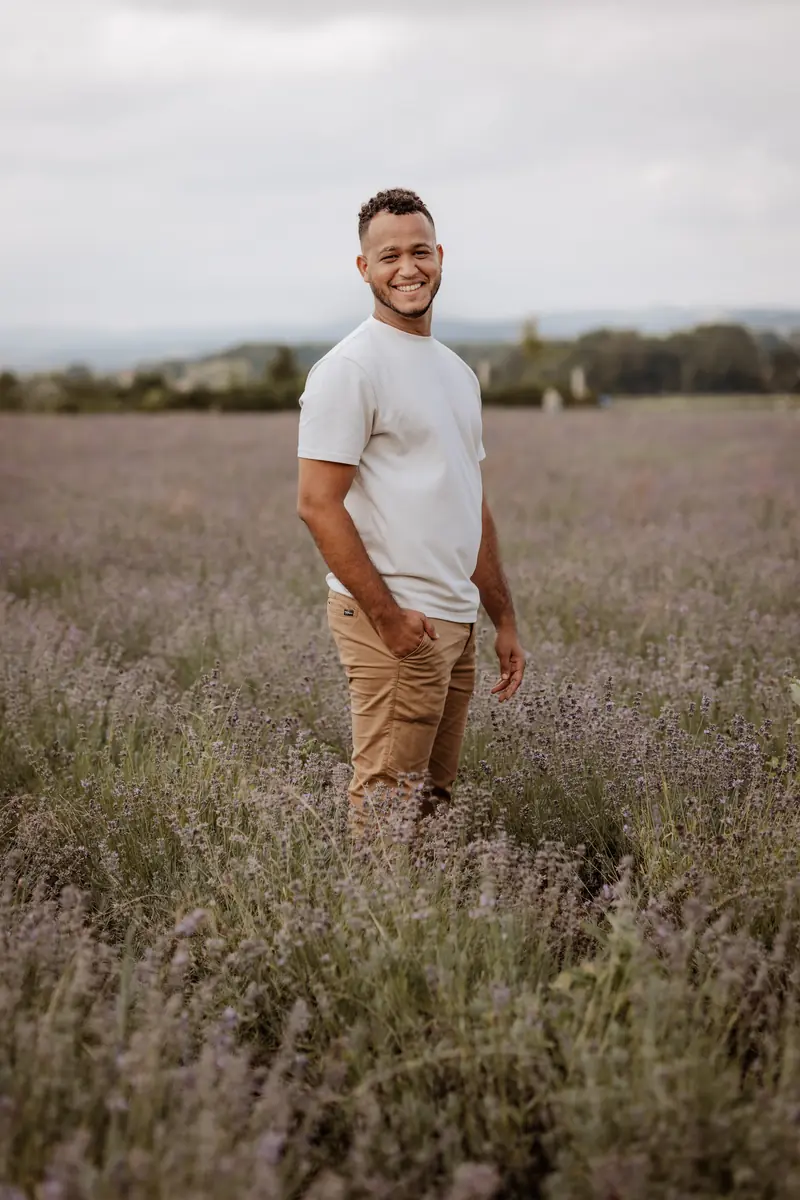
Fraimy PérezDominican instructor from Cabarete. Since 2019 he has taught traditional Dominican bachata, salsa and merengue in private lessons. Meet the instructor →
Ready to dance?
Book your bachata lesson in Cabarete.
Message me on WhatsApp with your dates, level and area. We agree on time and place in Cabarete.