
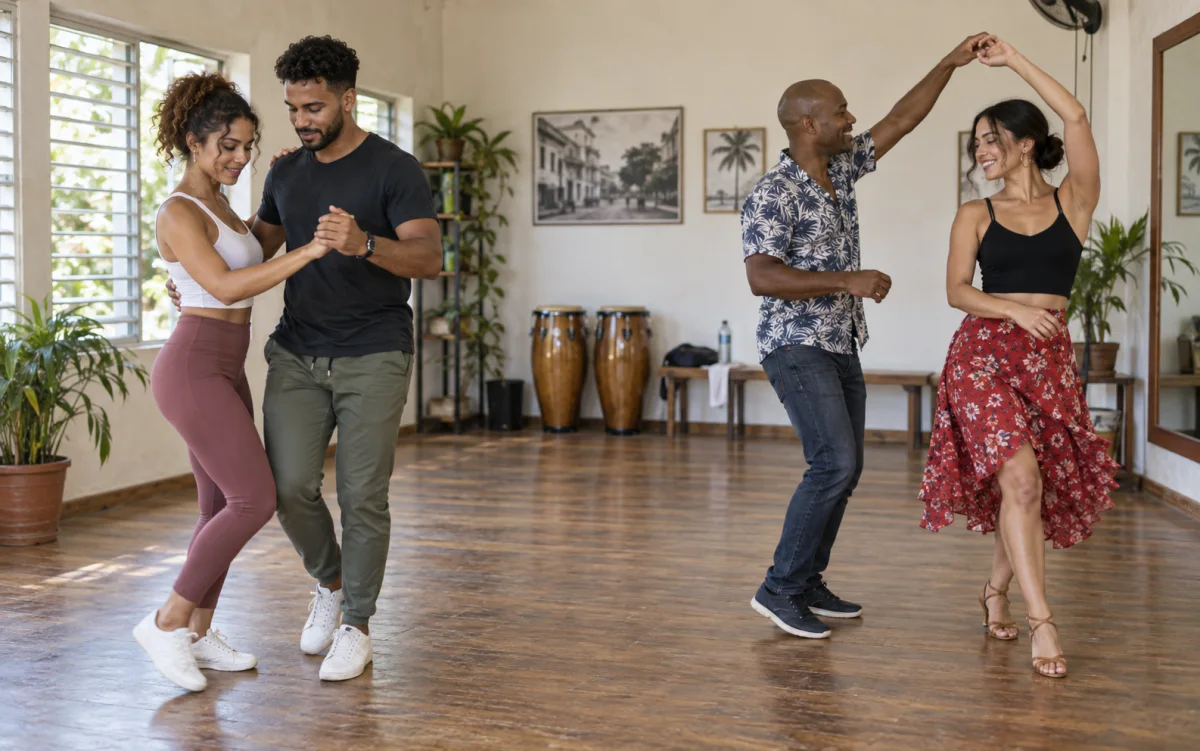
Try both before choosing a course
Listen to a song from each genre and mark its pulse by walking. Then try each basic step with an instructor. The better starting point is the one you want to repeat; you do not need to master one dance before trying the other.
The good news: there's no wrong choice. Both rhythms are beautiful, social and danced with a partner. But there is an order most instructors recommend so you progress quickly and dance with confidence from day one. Here's the honest breakdown, from people who teach these rhythms in the country where bachata was born.
The difference in one sentence
Bachata is a Dominican rhythm with a slow tempo, a four-count side-to-side basic step (three steps and a hip tap) and a close connection between partners. Salsa is faster, grew out of Cuban and Caribbean fusion, and is built on turns, direction changes and trickier timing. In short: bachata is about feeling; salsa is about coordination.
Which is easier for beginners?
For the vast majority of people, bachata is easier to pick up at first. Its slow tempo gives you time to think about the step, and the pattern repeats, so your body memorizes it fast. Most students dance the basic step and a simple turn in their very first class.
Salsa, by contrast, is faster and demands more coordination, especially with turns and staying on the music's timing. It's not hard to enjoy, but it takes a little more practice before you feel comfortable on a crowded floor. Interestingly, people who start with salsa often learn bachata faster afterwards, because they already have the turning technique and a strong sense of rhythm.
| Aspect | Bachata | Salsa |
|---|---|---|
| Tempo | Slow, relaxed | Fast, energetic |
| Basic step | Side-to-side, 4 counts with a tap | Forward-back with a pause |
| Learning curve | Gentle: you dance day one | Steeper at the start |
| Connection | Close, sensual | Dynamic, lots of turns |
| Best for | Starting out and building confidence | Those who want a challenge and energy |
Why starting with bachata makes sense in Cabarete
You're in the Dominican Republic, the birthplace of bachata. It's the rhythm you'll hear in the colmados, on the beach at sunset and in the bars along the main street. Learning it here is nothing like learning it at a studio back home: you feel it in the air, you practice it the same night, and you dance it with people who grew up with it. Starting with bachata lets you enjoy Cabarete's nightlife from your very first day.
If your trip is longer or you already have some experience, adding a salsa class brings variety to your repertoire. Many of our students mix both rhythms to keep things fresh and make the most of the week.
Our recommendation for your situation
If you only have one or two classes during your trip, start with Dominican bachata: it's the shortest path to really dancing on the floor. If you're here for a week or more and want an extra challenge, dedicate one session to salsa once you've got the bachata basics down. In our private classes in Cabarete we tailor the plan to the days you have and your level, so no minute is wasted.
Frequently asked questions
Should I learn salsa or bachata first? For most beginners, bachata is the best starting point thanks to its slow rhythm and simple step. In Cabarete it's also the local rhythm you'll dance that very night.
Which is easier, salsa or bachata? Bachata is usually easier at first. Salsa is faster and involves turns and trickier timing, so it takes a bit more practice.
Can I learn bachata in a single class? Yes. Most people dance the basic step and a simple turn by the end of a 60-minute private class.
Do I need a partner to learn? No. You can come on your own; your instructor dances with you throughout the class.
You might also like
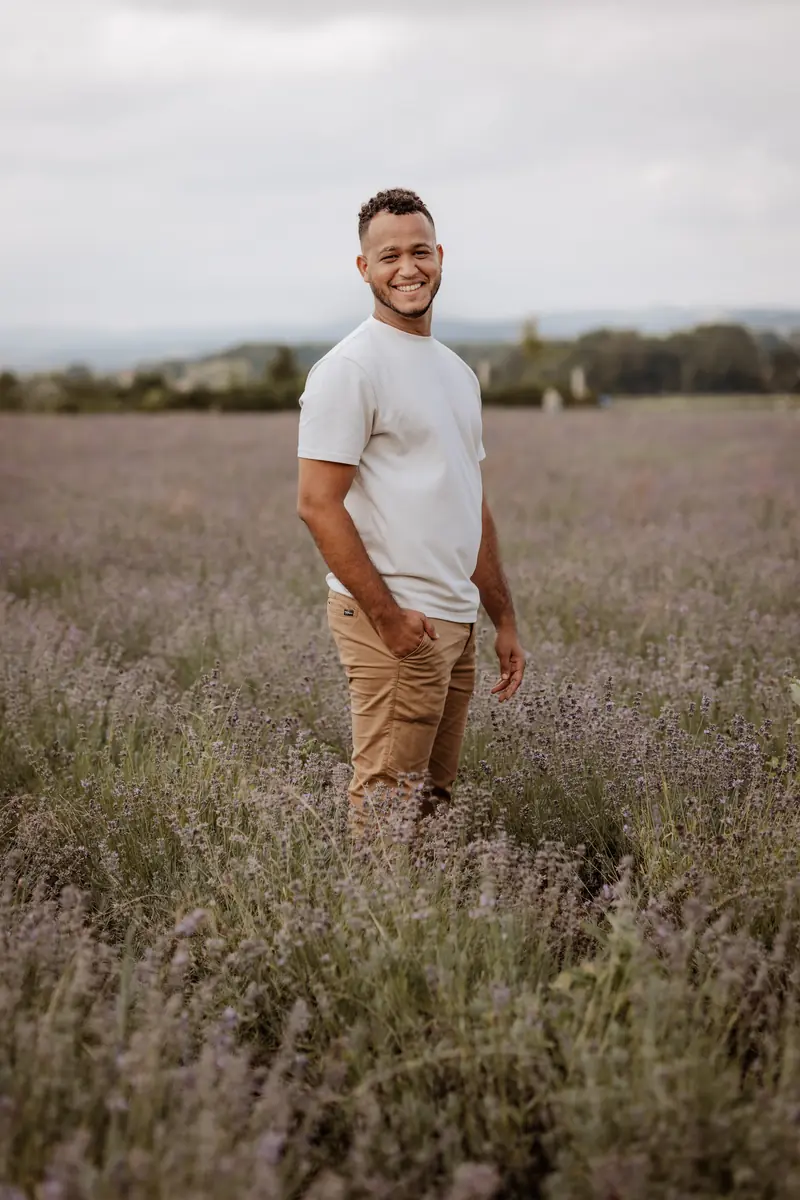
Fraimy PérezDominican instructor from Cabarete. Since 2019 he has taught traditional Dominican bachata, salsa and merengue in private lessons. Meet the instructor →
Ready to dance?
Book your bachata lesson in Cabarete.
Message me on WhatsApp with your dates, level and area. We agree on time and place in Cabarete.