By Fraimy Pérez – Bachata & Salsa instructor, Cabarete, Dominican Republic
If you’ve ever watched someone dance bachata and thought “I could never do that” – I’m here to tell you that you absolutely can. I’ve taught hundreds of complete beginners in Cabarete, and almost every single one of them was dancing confidently within one hour.
Bachata is one of the most learner-friendly Latin dances out there. The basic step is simple, the music is easy to feel, and once you get it, it becomes addictive. I’ve seen people with zero dance experience go from nervously counting steps to smiling and moving naturally – all in a single class.
In this guide, I’ll teach you the basics the same way I teach them here in the Dominican Republic: from the ground up, step by step, no dance experience needed.
What Is Bachata? (And Why It’s Born Here)
Bachata is a dance and music genre that originated in the Dominican Republic in the early 20th century. It was born in the rural countryside – in the “bateyes” (small farming communities) – as music of everyday life, heartbreak, and love.
For many decades, bachata was considered music of the poor and was even banned from radio stations. But it slowly conquered the world. Today, it’s danced in over 50 countries and has hundreds of millions of streams on Spotify.
There are two main styles you’ll encounter:
- Dominican Bachata – the original style. Grounded, playful, rhythmically rich. This is what we dance here in Cabarete.
- Modern/Sensual Bachata – a newer style, more theatrical and body-wave-focused. Popular in Europe and at dance congresses.
As a Dominican instructor, I teach the original Dominican style first. It’s the foundation. Everything else grows from here.
Understanding the Music Before You Move
One of the biggest mistakes beginners make is trying to learn steps before they feel the music. Bachata is an 8-count dance built on a 4/4 rhythm. That means you count in groups of 4 – and every phrase repeats.
Listen for the guitar. In bachata, the requinto (lead guitar) plays a distinctive melodic pattern. That’s your guide. When you hear it, you’ll start to feel where the beat is.
Listen for the bongos. The percussion section marks the rhythm clearly. The “tap” on beat 4 (and beat 8) is where the magic happens – more on that in a moment.
A great song to practice with as a total beginner: “Propuesta Indecente” by Romeo Santos, or “El Perdón” by Nicky Jam. Both have a clear, easy-to-follow rhythm.
The Basic Bachata Step (Side-to-Side)
This is where everyone starts. The side-to-side basic is the foundation of all bachata.
Here’s the pattern in plain language:
Count 1: Step to the left with your left foot
Count 2: Bring your right foot to meet your left (or slightly past it)
Count 3: Step to the left again with your left foot
Count 4: Tap your right foot next to your left foot – no weight transfer, just a light tap with a small hip accent
Then you repeat the same thing going right:
Count 5: Step to the right with your right foot
Count 6: Bring your left foot to meet your right
Count 7: Step to the right again with your right foot
Count 8: Tap your left foot next to your right – again, light tap, hip accent
That’s it. That’s the bachata basic. Eight counts, side to side, with a tap on 4 and 8.
The Hip Movement
The hips are what make bachata look like bachata. But here’s the thing most people get wrong: you don’t move your hips on purpose. The hip movement is a natural consequence of how you shift your weight.
When you step onto a bent knee, your opposite hip rises slightly. That’s the natural bachata hip. Don’t force it, don’t exaggerate it – let it happen. As you get more comfortable with the steps, the hips will come on their own.
The Forward-and-Back Basic
Once you have the side-to-side basic, you can learn the forward-and-back variation. This one is used more in Dominican style and gives the dance a more grounded, traveling feel.
Count 1: Step forward with your left foot
Count 2: Small step forward with your right foot (close the gap)
Count 3: Step forward again with your left foot
Count 4: Tap right foot next to left, hip accent
Count 5: Step back with your right foot
Count 6: Small step back with your left foot
Count 7: Step back again with your right foot
Count 8: Tap left foot next to right, hip accent
Practice both basics until they feel natural before trying to combine them or add turns.
Common Beginner Mistakes (and How to Fix Them)
After teaching hundreds of students, I see the same mistakes over and over. Here’s how to avoid them:
1. Looking at your feet
I understand – it feels like you need to check what your feet are doing. But looking down breaks your posture and disconnects you from your partner. Trust your feet. They’ll learn faster than your brain will.
2. Counting out loud… forever
Counting is a great tool at the beginning, but if you’re still counting after 20 minutes, you’re relying on it too much. Try humming the music instead of counting numbers. It forces you to connect with the rhythm rather than the math.
3. Taking big steps
Bachata steps are small and controlled. Big steps make the dance look stiff and make it harder to change direction. Keep your steps compact – about shoulder width or slightly less.
4. Holding your breath
This sounds silly, but many beginners tense up and literally forget to breathe. Relax your shoulders, soften your knees, and breathe. A relaxed body learns faster and moves more naturally.
5. Rushing the tap
The tap on beat 4 and 8 is where bachata gets its flavor. Many beginners rush through it to get to the next step. Slow down there. Let the tap breathe. That pause is what makes the dance feel musical.
Dancing with a Partner: The Connection
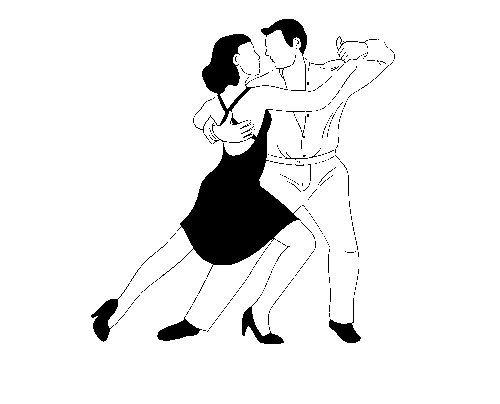
If you’re learning with a partner (or want to), the most important thing is the frame – how you hold each other.
In Dominican bachata, the hold is close but not rigid. Here’s the basic closed position:
- Leader (traditionally the man): Place your right hand on your partner’s upper back (not pulling them). Your left hand holds their right hand, slightly out to the side at about eye level.
- Follower (traditionally the woman): Rest your left hand lightly on your partner’s right shoulder or upper arm. Your right hand is held by their left.
The connection comes from your core and chest, not from pushing or pulling with your arms. Think of it as an invitation to move together, not a grip.
Leading and following: The leader communicates direction through subtle pressure – forward, back, left, right. The follower responds to that pressure without anticipating. This is a conversation between bodies, and like any good conversation, it works best when both people are listening.
Your First Week: What to Practice
If you want to make real progress in your first week of learning bachata, here’s what I’d recommend:
Day 1–2: Practice the side-to-side basic alone, with music, for 10 minutes a day. Focus on the tap and letting the hips come naturally.
Day 3–4: Add the forward-and-back basic. Alternate between both. Keep it slow.
Day 5–6: Try dancing with a partner. Don’t worry about turns or fancy moves – just practice walking through the basics in hold. Feel the connection.
Day 7: Go out to a social dance night or put on a playlist and just move. Forget the counts. Feel the music.
The biggest secret to learning bachata quickly? Dance with people who are better than you. Whether that’s a friend, a classmate, or an instructor – you’ll absorb more in 10 minutes of dancing with someone skilled than in an hour of solo practice.
Why Learning Bachata in the Dominican Republic is Different
There’s a reason dancers from all over the world travel here to learn. When you learn bachata in the country where it was born, you’re not just learning steps – you’re learning context. The music, the culture, the feeling behind the dance.
Here in Cabarete, bachata isn’t a dance class. It’s how people celebrate birthdays, weddings, weekends. Kids grow up watching their parents dance it. It’s in the air.
When you take a private lesson here, you don’t just get technique. You get the story, the history, the feel – the things that can’t be learned from a YouTube video.
Ready to Take Your First Class?
If you’re visiting Cabarete – or planning to – I’d love to teach you. We offer private lessons for all levels, from total beginners to those looking to polish their technique. Most of my students tell me they learned more in one hour with me than they did in months of group classes elsewhere.
📍 Located in Cabarete, Calle Mariposa, Dominican Republic
📱 Book via WhatsApp: +1 829 712 9741
Classes are available daily, for individuals and couples. All levels welcome.
Frequently Asked Questions
How long does it take to learn bachata?
Most people get the basic step in 30–45 minutes. After 3–5 classes, you’ll have a solid foundation you can use on any dance floor. The depth of the dance takes years to explore – but the joy of it starts on day one.
Do I need a partner to learn?
No. You can absolutely learn solo. The footwork, hip movement, and musicality are all things you practice on your own. A partner just adds a new layer of communication.
Is bachata hard to learn?
Bachata is widely considered one of the easiest Latin dances to pick up. The rhythm is clear, the steps are small, and the basic pattern repeats. If you can count to 8, you can start learning today.
What’s the difference between Dominican bachata and sensual bachata?
Dominican bachata is the original style – grounded, playful, with a lot of footwork and rhythm. Sensual bachata is a newer, more theatrical style developed mainly in Spain. Both are beautiful. I recommend learning Dominican style first as your foundation.
Can I learn bachata at any age?
Absolutely. I’ve taught students from 18 to 65. Bachata has no age requirements – only a willingness to move and have fun.
Fraimy Pérez is a dance instructor born and raised in Cabarete, Dominican Republic. With over 5 years of teaching experience and students from across Europe, North America, and Latin America, he specializes in authentic Dominican bachata and salsa for all levels.
No responses yet